
Google Ads Management in Botswana Built to Generate More Enquiries
Reach people actively searching for your products or services with professionally managed Google Search campaigns, conversion tracking and ongoing optimization focused on meaningful customer actions.
- ✓ Reach high-intent customers when they are searching
- ✓ Track calls, forms, enquiries and other valuable actions
- ✓ Reduce wasted spend through ongoing campaign optimization
- ✓ Understand where your advertising budget is going

Running Google Ads Is Easy. Running Them Efficiently Is the Hard Part.
Google Ads can put your business in front of people actively searching—but poor targeting, weak tracking and the wrong landing experience can turn that traffic into expensive clicks instead of useful enquiries.
Paying for the Wrong Searches
Broad or poorly chosen keywords can attract people who are researching, looking for jobs, seeking free information or searching for something your business does not actually offer.
No Clear Conversion Tracking
If calls, forms, quote requests and other meaningful actions are not tracked properly, it becomes difficult to know which campaigns are creating business opportunities.
Sending Every Click to the Same Page
A generic homepage may not answer the specific need behind the search. Better campaign performance often starts with stronger message match between the search, ad and landing page.
Campaigns Are Launched and Left Alone
Search behaviour changes. New search terms appear. Competitors adjust. Budgets shift. Google Ads needs ongoing review and optimization rather than a one-time setup.
Optimizing for Clicks Instead of Customers
A high click-through rate can look good while producing poor-quality enquiries. The goal should be meaningful customer actions—not simply more traffic.
No Strategy Behind the Budget
Increasing spend does not automatically improve results. Budget should be allocated according to search intent, campaign performance, conversion quality and business priorities.
The problem is not always Google Ads.
Sometimes the real bottleneck is the keyword strategy, conversion tracking, landing page, offer or follow-up process around the campaign.
From Search to Enquiry: A Better Google Ads Customer Acquisition System
Google Ads performs best when every part of the journey works together—from the search someone types into Google to the action they take after clicking your ad.
Capture Demand
Show up when potential customers are actively searching for the products or services your business offers.
Match Search Intent
Use the right keywords, targeting and ad message so the campaign attracts people whose searches closely match what you sell.
Convert the Click
Send visitors to a page that clearly answers their need, builds trust and gives them an obvious next step.
Measure Customer Actions
Track meaningful outcomes such as calls, forms, quote requests, bookings or purchases—not just clicks.
Improve What Works
Use real campaign data to refine keywords, ads, budgets, targeting and landing-page performance over time.
Google Ads is not just an advertising platform. It is a customer acquisition system.
When search demand, campaign targeting, landing pages and conversion tracking work together, your advertising decisions become easier to measure and improve.
Google Ads Works Best When the Search Demand and Business Fit Are Already There
Google Ads can be a strong customer-acquisition channel when people are actively searching for what you sell, your offer is clear, and your business is ready to convert enquiries into customers.
People Already Search for What You Offer
Google Ads is strongest when there is existing demand and customers are already searching for your service, product or solution.
You Have a Clear Commercial Offer
Ads work better when the visitor can quickly understand what you sell, who it is for and what action they should take next.
Each New Customer Is Worth Enough
Google Ads makes more sense when the value of a new customer can support the cost of advertising and campaign management.
You Can Handle New Enquiries
More leads only help if your business can answer calls, respond quickly and follow up consistently.
Your Website Can Support the Campaign
A professional landing page or website should make it easy for visitors to trust the business, understand the offer and take action.
You Have Budget for Management and Ad Spend
Google Ads needs enough budget to generate useful campaign data and enough time to optimize based on what that data shows.
The goal is not to sell every business Google Ads.
The goal is to identify whether paid search is the right starting point—and if it is, build the campaign around the economics and customer journey of the business.
Google Ads Management That Covers the Whole Campaign — Not Just the Ads
Effective Google Ads management is more than choosing a few keywords and switching a campaign on. We manage the strategy, targeting, tracking, optimization and reporting needed to give your campaigns a better chance of producing useful business enquiries.
Campaign Strategy & Structure
We plan how campaigns should be organized around your services, locations, customer intent and business priorities before budget is committed.
Keyword & Search Intent Research
We identify the searches most closely connected to your offer, group them logically and filter out low-value or irrelevant traffic.
Ad Copy & Messaging
We write clear, relevant ads that match what people are searching for and guide the right prospects toward the next step.
Location, Device & Audience Targeting
We configure targeting around the markets, devices and audience signals that make sense for your business.
Conversion Tracking Setup
We track meaningful actions such as calls, forms, quote requests, bookings or purchases so campaign decisions are based on more than clicks.
Negative Keyword Management
We continually exclude irrelevant searches that can consume budget without producing useful opportunities.
Budget & Bidding Management
We manage spend and bidding based on campaign goals, available data and the value of different search opportunities.
Landing Page Recommendations
We identify issues that may be reducing conversions after the click, including weak messaging, poor mobile experience or unclear calls to action.
Ongoing Campaign Optimization
We review search terms, ads, targeting, conversion quality and budget allocation so campaigns can improve over time.
Reporting & Recommendations
You receive clear reporting on what is happening, what matters and what should be adjusted next.
One campaign. Multiple moving parts.
Google Ads works better when strategy, traffic quality, conversion tracking and post-click experience are managed together.
Google Search Ads Management for Customers Already Looking for What You Sell
Google Search Ads can put your business in front of people at the moment they are actively searching for a product, service or solution like yours. The opportunity is strong—but only when the keywords, ad message, location targeting and landing page all match the intent behind the search.
Clear offer, relevant message and an easy way to call, message or request a quote.
Additional information shown in search results.
Reach High-Intent Searchers
Search campaigns are designed around people already expressing demand. That makes them different from channels where you first have to interrupt or create interest.
Match the Right Search With the Right Offer
We structure campaigns so different products, services and customer needs can be matched with more relevant keywords, ads and landing pages.
Control Where Your Ads Appear
We use location targeting, negative keywords, search-term reviews and campaign settings to reduce irrelevant traffic and keep the campaign focused on the market you actually serve.
Give the Click a Clear Next Step
A strong ad is only the first half of the journey. The page someone lands on should clearly answer the search, build trust and make calling, messaging or requesting a quote easy.
The goal is not simply to buy more clicks.
The goal is to put your business in front of the right searcher, with the right message, and give that person a clear path to becoming an enquiry.
Google Ads Keyword Strategy Built Around Search Intent — Not Just Search Volume
The best keyword is not always the one with the most searches. We focus on what the search suggests about the person behind it—what they want, how close they may be to taking action, and whether your business is a good match.
Prioritize Commercial Intent
We look for searches that signal a real need for your product or service, rather than chasing traffic from people who are only researching, learning or browsing.
Group Keywords by Customer Need
Different searches often represent different problems, services or buying stages. We organize campaigns so the ad message can match the intent more closely.
Use Match Types Deliberately
Exact, phrase and broad match can each have a role. The goal is to control reach without unnecessarily limiting useful search opportunities.
Build Negative Keyword Lists
We identify searches that are unlikely to become customers and exclude them where appropriate to help reduce wasted spend.
Review Real Search Terms
The search terms report shows what people actually typed before seeing or clicking an ad. We use that data to find new opportunities and remove poor-fit traffic.
Layer in Location & Business Context
The right keyword can still be wrong if the searcher is outside your market, looking for the wrong service type or has different commercial intent.
Not every search has the same business value.
Informational
“What is...?” · “How does...?” · “Examples of...”
Usually earlier in the buying journey and lower in immediate purchase intent.
Comparison
“Best...” · “vs...” · “reviews...”
The searcher is evaluating possible solutions, providers or approaches.
Commercial
“Company...” · “service...” · “agency...” · “provider...”
The searcher is actively exploring businesses that may be able to help.
Transactional
“Book...” · “get quote...” · “near me...” · “buy...”
The search often suggests stronger action intent and a clearer next step.
The goal is not to appear for every related search.
The goal is to appear more often for searches that make sense for your business—and learn from the search data over time.
Other Google Ads Campaign Types — Used When They Fit the Goal
Google Search Ads are often the strongest starting point for capturing active demand, but they are not the only option. Depending on your business model, goals, available data and creative assets, other campaign types can support growth in different ways.
Performance Max
Performance Max can extend your reach across Google’s advertising inventory using one goal-based campaign. It can be useful when you have strong conversion tracking, enough data and suitable creative assets to support broader automated delivery.
Remarketing & Display
Remarketing can help you reconnect with people who have already visited your website or interacted with your business. Display campaigns can also support broader visibility when audience and placement strategy make sense.
Google Shopping Ads
For ecommerce businesses, Shopping campaigns can show products directly in Google with information such as product imagery, pricing and merchant details.
YouTube Advertising
YouTube campaigns can help businesses reach potential customers with video when awareness, education or demand generation is part of the strategy.
Not every business needs every campaign type.
We recommend campaign types based on the business goal, available budget, conversion data, customer journey and the strength of the underlying website or offer.
The platform gives you options. Strategy decides which ones are worth using.
Know Which Google Ads Clicks Are Turning Into Real Business Opportunities
Clicks and impressions tell only part of the story. Conversion tracking helps connect your Google Ads campaigns to meaningful actions such as calls, forms, quote requests, bookings and purchases so decisions can be based on what is actually creating value.
Form & Quote Request Tracking
Track when visitors submit contact forms, request quotes or complete other important lead actions on your website.
Phone Call Tracking
Measure calls generated from ads or landing pages where call tracking is appropriate, so phone enquiries can be included in campaign performance.
WhatsApp & Messaging Actions
Where relevant, track clicks on WhatsApp or other messaging actions to understand how often ad traffic moves into direct conversations.
Booking & Purchase Tracking
For businesses with online bookings or ecommerce, track completed transactions or booking actions that matter to the business.
Conversion Quality Review
A conversion is not automatically a good lead. We look beyond totals and consider whether the enquiries generated are relevant to the business.
GA4 & Google Ads Measurement Setup
Connect the right website events and conversion actions so campaign reporting is based on useful business outcomes rather than surface-level metrics.
Move from traffic metrics to business outcomes.
Traffic Metrics
Impressions · Clicks · CTR · CPC
Conversion Metrics
Leads · Calls · Forms · Bookings · Purchases
Efficiency Metrics
Conversion rate · Cost per conversion · Budget allocation
Business Quality Signals
Lead relevance · Customer value · Follow-up outcome · Sales quality
Clicks are a cost. Conversions tell you whether those clicks are doing useful work.
Better Google Ads Cannot Fix a Poor Landing Experience
A strong campaign can bring the right person to your website, but the page they land on still has to do its job. The message, trust, speed and next step all influence whether that click becomes an enquiry or disappears.
Match the Search With the Page
The landing page should continue the same message the visitor saw in the ad so they immediately know they are in the right place.
Make the Offer Clear Quickly
Visitors should not have to work to understand what you sell, who it is for or why they should keep reading.
Build Trust Before Asking for Action
Reviews, proof, clear business information, real work and credible messaging help reduce hesitation after the click.
Make the Next Step Obvious
Calls, forms, WhatsApp, bookings or quote requests should be easy to find and simple to complete.
Design for Mobile Visitors
Many ad clicks happen on mobile. Pages should load quickly, read clearly and make important actions easy to complete on smaller screens.
Remove Conversion Friction
Long forms, confusing navigation, weak page speed, unclear pricing and poor messaging can all reduce the value of paid traffic.
Sometimes the campaign is not the main problem. The page is.
If the ads are attracting relevant visitors but the website is not converting them, increasing the ad budget may only increase the amount being spent on a weak post-click experience.
Google Ads Management Does Not Stop After the Campaign Goes Live
Launching the campaign is only the beginning. Ongoing Google Ads optimization uses real search, conversion and budget data to improve targeting, reduce waste and make better decisions over time.
Search Term Reviews
We review the real searches triggering your ads to identify useful new opportunities and remove irrelevant traffic.
Negative Keyword Expansion
Poor-fit search terms are excluded where appropriate so more of the budget stays focused on relevant demand.
Ad Copy Testing
We compare messaging, calls to action and offer angles to learn which ads attract stronger engagement and more useful enquiries.
Budget Reallocation
Spend is adjusted toward campaigns, keywords or locations showing stronger business value instead of treating every part of the account equally.
Bidding & Conversion Strategy
Bidding decisions should reflect campaign goals, conversion data and account maturity rather than relying on automation without context.
Location, Device & Time Analysis
We review where, how and when useful customer actions happen so campaign settings can be adjusted where the data supports it.
Conversion Quality Checks
More conversions are not always better if the leads are poor. We consider relevance and business quality, not just totals.
Landing Page Feedback
When campaign data suggests the post-click experience is reducing results, we identify page issues that may need to be improved.
A campaign should get smarter as useful data builds.
Optimization is not about changing things for the sake of activity.
It is about using enough reliable data to decide what should stay, what should change and where the next budget decision makes the most sense.
Clear Google Ads Management Pricing in Botswana
Your Google Ads investment has two separate parts: the management fee paid to Lephutshi Developers and the advertising budget paid to Google. Keeping them separate makes it easier to understand what you are paying for and how much is going directly into media spend.
Ads Launch
Suggested ad spend: from P1,500/month
Best for businesses starting with a focused Google Search campaign.
- Focused campaign setup and management
- Keyword and search-intent research
- Ad copy and targeting
- Conversion tracking
- Negative keyword management
- Ongoing optimization
- Performance reporting
Ads Growth
Suggested ad spend: from P3,000/month
Best for growing businesses that need broader campaign coverage and stronger optimization.
- Up to 2 managed campaigns
- Deeper keyword and search-term management
- Conversion tracking and measurement
- Ongoing ad and budget optimization
- Landing-page recommendations
- Regular reporting and recommendations
Ads Performance
Suggested ad spend: from P6,000/month
Best for businesses investing more aggressively in paid customer acquisition.
- Broader Google Ads campaign management
- More advanced optimization
- Campaign and budget prioritization
- Conversion quality review
- Landing-page and funnel recommendations
- Performance reporting and ongoing strategy
Management Fee
Paid to Lephutshi Developers for strategy, setup, optimization, tracking and reporting.
Google Ad Spend
The advertising budget used to buy traffic through Google Ads.
You stay in control of the budget.
We help you structure and manage the campaign, but the media budget remains separate so you can clearly see the cost of management versus the cost of advertising.
A Clear Google Ads Management Process From Strategy to Ongoing Improvement
You should know what happens before your campaigns launch, what we manage after they go live, and how decisions are made over time. Our process keeps the work structured, transparent and focused on useful business outcomes.
Diagnose
We start by understanding your business, offer, target customers, service areas, current marketing, website and what you want Google Ads to achieve.
Prioritize
We identify the most sensible campaign type, search opportunities, budget approach and conversion actions to focus on first.
Build
We structure the account, research keywords, write ads, configure targeting and set up the tracking needed to measure meaningful actions.
Launch & Learn
Once campaigns go live, we collect real search, click and conversion data rather than making decisions from assumptions alone.
Optimize
We review search terms, negative keywords, ads, budget allocation, bidding, locations, devices and conversion quality to improve performance over time.
Report & Recommend
We explain what is happening, what the data means and what should change next so you understand the direction of the campaign.
You are not handing over your budget and hoping for the best.
You get a defined process for planning, launching, measuring and improving your Google Ads campaigns.
Google Ads vs SEO vs Meta Ads: Which One Fits Your Business Goal?
These channels solve different marketing problems. Google Ads can capture existing search demand, SEO can build long-term organic visibility, while Meta Ads can help reach and influence audiences before they search. The right starting point depends on how your customers discover businesses like yours.
Google Ads
Capture Existing Demand
Reach people actively searching on Google for a product, service or solution like yours.
- Customers already search for what you sell
- You want search visibility sooner
- You have a clear offer and conversion path
- You can support ongoing advertising spend
SEO
Build Organic Search Visibility
Improve your website so it can become more visible for relevant searches without paying Google for every click.
- Search is important to long-term acquisition
- Customers research before choosing
- You want to build organic visibility and authority
- You can invest consistently over time
Meta Ads
Create & Influence Demand
Reach people across Facebook and Instagram based on audiences, interests, behaviours and campaign signals—even when they are not actively searching.
- Customers can be identified through audiences
- Your offer is visually compelling
- Awareness or demand generation matters
- You have strong creative assets
Sometimes the answer is not Google Ads or SEO or Meta Ads.
The channels can support different stages of the same customer journey. The mix should follow the business problem—not a fixed package of tactics.
Not sure which channel your business should start with?
Tell us what you sell, how customers currently find you and what you want marketing to achieve. We’ll recommend a sensible starting point.
Google Ads Management Built Around the Business — Not Just the Ad Account
A Google Ads campaign does not exist in isolation. The offer, website, tracking, customer journey and follow-up process all affect what happens after someone clicks. Lephutshi Developers brings those pieces together so campaign decisions can be made in a wider business context.
Botswana Market Focus
We work with Botswana businesses and build campaigns around local service areas, customer behaviour, search demand and commercial realities.
Strategy Before Spend
We do not start by asking how much you want to spend. We first look at the offer, demand, search intent, website and conversion path to determine whether Google Ads makes sense.
Conversion Tracking Included
We focus on meaningful customer actions such as calls, forms, quote requests and other conversions—not just impressions and clicks.
Website + Advertising Capability
If the problem is the landing page, messaging or customer journey rather than the campaign itself, we can identify and address the wider conversion issue.
Transparent Pricing
Management fees and Google ad spend are kept separate so you can clearly see what is being paid for campaign management and what is going directly into advertising.
Multi-Channel Perspective
Google Ads may work alongside SEO, Local SEO, Meta Ads, content and follow-up. We can recommend the channel mix based on the business problem instead of forcing every client into the same tactic.
The goal is not simply to manage Google Ads.
The goal is to help your business make better decisions about paid search, customer acquisition and where your marketing budget should work hardest.
Research Google Ads Before You Invest
Not ready to request Google Ads management yet? Explore practical guides covering setup, costs, campaign optimization and whether paid search makes sense for your business.
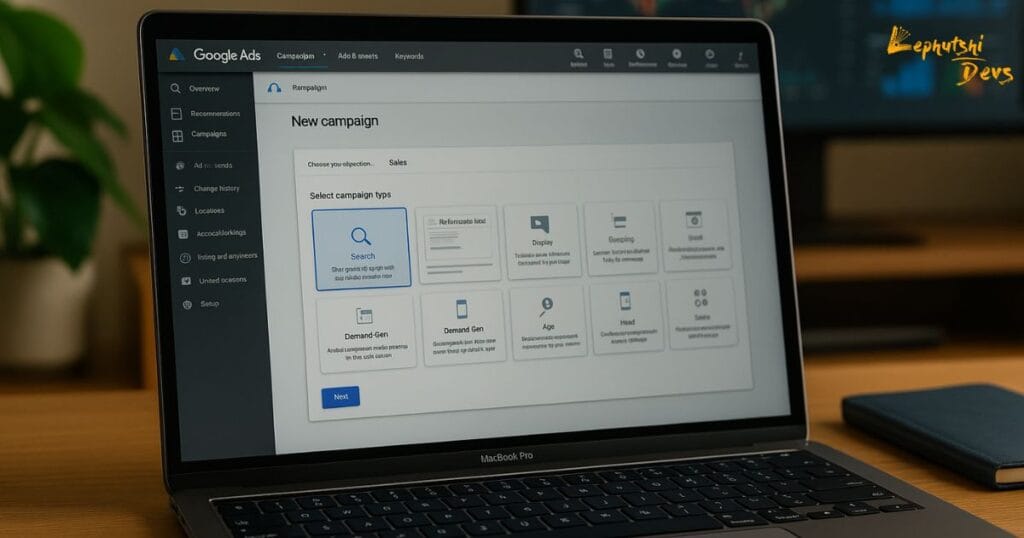
How to Start Google Ads in Botswana: Step-by-Step Setup for Beginners
Launch Google Ads confidently with our step-by-step guide to quick growth and real results
Read Guide →
How Much Does Google Ads Cost? (Budgeting & ROI Explained)
Master Google Ads budgeting in Botswana. From understanding CPC and Quality Score to setting a daily budget that actually drives leads for your local…
Read Guide →
Is Google Ads Worth It? ROI for Small Businesses
Discover if Google Ads is worth the investment for Botswana SMEs. We break down ROI, local costs in Pula, and how to choose the…
Read Guide →
Optimizing Your Google Ads Campaign: Best Practices & Pro Tips
Are you spending money on Google Ads without seeing results? Discover the best practices for optimizing your Google Ads campaign in Botswana, from keyword…
Read Guide →
Google Ads in Botswana: A Comprehensive Beginner’s Guide for PPC & ROI
Unleash the power of Google Ads! A beginner's guide you wouldn't want to miss.
Read Guide →
How Much Do Online Ads Cost in Botswana? A Complete Guide for Local Businesses
Discover how much online ads cost in Botswana in 2026. Compare Google, Facebook, Instagram & TikTok ad costs, plus tips to maximize your ROI.
Read Guide →Understand the options. Then build the right campaign.
If you already know Google Ads could fit your business, we can help determine the most sensible campaign, budget and tracking approach.
Questions Businesses Ask Before Investing in Google Ads
Google Ads can be a strong customer-acquisition channel, but only when the economics, search demand, website and campaign strategy make sense. Here are straightforward answers to the questions business owners commonly ask before investing.
01 How much do Google Ads cost for a small business?
There is no fixed Google Ads price because advertising cost depends on competition, keywords, location, campaign type and how aggressively you want to compete.
For our Botswana Google Ads management packages, management starts from P2,500/month, with suggested advertising budgets starting from around P1,500/month. Management fees and Google ad spend are separate.
02 Is P1,500–P2,000 per month enough to start Google Ads?
It can be enough for a tightly focused test in a smaller market, especially when targeting a limited service area and a small group of high-intent searches.
A small budget becomes less effective when spread across too many services, locations or campaign types. We would rather concentrate the budget around the strongest opportunity first and expand when the data supports it.
03 Are Google Ads worth it for a small business?
They can be when customers are already searching for what the business sells, the value of a new customer justifies the advertising cost, and the website can convert visitors into enquiries or sales.
Google Ads may be a weaker fit when there is little search demand, margins are extremely low, the offer is unclear or the business cannot respond effectively to new leads.
04 How quickly do Google Ads work?
Google Ads can begin generating visibility and traffic shortly after a campaign is approved and launched, but meaningful performance data takes longer to build.
The early period is usually about learning which searches, ads, audiences and landing-page experiences produce useful customer actions. Campaigns should be judged on conversion quality and economics, not simply whether they received clicks immediately.
05 Can I run Google Ads myself?
Yes. Google gives businesses direct access to create and manage their own campaigns.
The difficult part is usually not launching the ads. It is deciding which searches to target, structuring campaigns properly, tracking conversions, excluding wasted traffic, managing bidding and interpreting the data well enough to improve results.
06 How much should I pay someone to manage my Google Ads?
Management fees vary depending on account complexity, advertising budget, number of campaigns and the level of ongoing optimization required.
At Lephutshi Developers, our current Google Ads management packages are P2,500, P4,000 and P6,500 per month, with Google ad spend paid separately.
07 What does Google Ads management include?
Professional management should involve more than creating advertisements.
Our management can include campaign strategy, keyword and search-intent research, campaign structure, ad messaging, targeting, conversion tracking, negative keywords, budget and bidding management, search-term analysis, ongoing optimization, landing-page recommendations and reporting.
08 How can Google Ads generate leads for my business?
Google Ads can place your business in front of people searching for products or services related to what you offer.
The campaign therefore has to do more than generate clicks. Every stage after the click affects whether the visitor becomes a lead.
09 What are the disadvantages of using Google Ads?
Google Ads requires ongoing advertising spend, competitive keywords can become expensive, poor targeting can waste budget and paid visibility generally stops when the campaign stops spending.
It also cannot compensate indefinitely for a weak offer, poor website or broken sales process. That is why we evaluate the wider customer journey instead of treating the ad account as an isolated system.
10 Which is better: SEO or Google Ads?
Neither is automatically better.
Google Ads is useful for capturing existing search demand with paid visibility. SEO is useful for building organic search visibility over time.
Many businesses can benefit from both: Google Ads can capture demand now while SEO builds a longer-term organic acquisition channel.
11 Do I need a landing page or website for Google Ads?
For most lead-generation Search campaigns, a strong website or dedicated landing page is extremely important.
The page needs to continue the message from the advertisement, explain the offer clearly, establish trust and provide an obvious next step such as calling, submitting a form, booking or starting a WhatsApp conversation.
Driving paid traffic to a poor page can simply make wasted traffic more expensive.
12 Which Google Ads campaign type is best for my business?
There is no single campaign type that is best for every business.
For many service businesses, Search campaigns are a logical starting point because they can target people already searching for the service.
Performance Max, Shopping, Display, remarketing and YouTube can make sense when the objective, conversion data, products, audiences and creative assets justify them.
You do not have to decide the campaign strategy before contacting us.
Tell us what your business sells, where your customers are and what you want advertising to achieve. We can recommend a sensible starting point.
If Your Customers Are Searching on Google, Make Sure They Can Find the Right Business
You do not need to know the perfect campaign type, keyword list or budget before contacting us. Tell us what your business sells, who you want to reach and what you want Google Ads to achieve. We’ll help you identify a sensible starting point.
Find out whether Google Ads fits your business
Get a recommended campaign and budget direction
Understand what should be tracked before launch
Identify whether your website is ready for paid traffic
What you sell, where you operate and who you want to reach.
Search demand, offer, website, tracking and likely campaign direction.
A sensible next step based on the business—not a generic package.