

Hiring a web development agency Botswana businesses can rely on is a significant operational decision. You are not only buying pages and visuals; you are commissioning a customer-facing system that needs to explain your offer, work on mobile, capture enquiries, support marketing, and remain manageable after launch.
A professional engagement usually moves through discovery, planning, design, development, content and integrations, testing, launch, and post-launch support. You should receive a written scope, clear milestones, access to the systems that run your site, and a documented handover. This guide helps Botswana business owners and marketing teams assess what that delivery should look like before they sign a proposal.
What a Web Development Agency Actually Does
A website development agency plans, designs, builds, tests, launches, and maintains websites. Its role extends beyond making a site look good. A capable team translates business needs into user journeys, page structures, content requirements, technical features, and a practical launch plan.
Depending on the project, a web agency may handle business discovery, UX and UI design, frontend and backend development, CMS setup, e-commerce features, lead forms, analytics, CRM connections, hosting coordination, and ongoing maintenance. For a Botswana service business, this could mean making it easy for a visitor to understand services, find a location, call, email, or start a WhatsApp enquiry. For an online store, it may also include product management, payment flow, order notifications, and delivery information.
Search-ready technical foundations should also be considered during the build: logical page structure, crawlable content, sensible URLs, mobile usability, and performance checks. These practices help search engines access and understand a site, but they do not guarantee rankings, traffic, or leads. Google’s SEO Starter Guide explains the underlying principles.
Agency vs Freelancer vs DIY: Choosing the Right Path
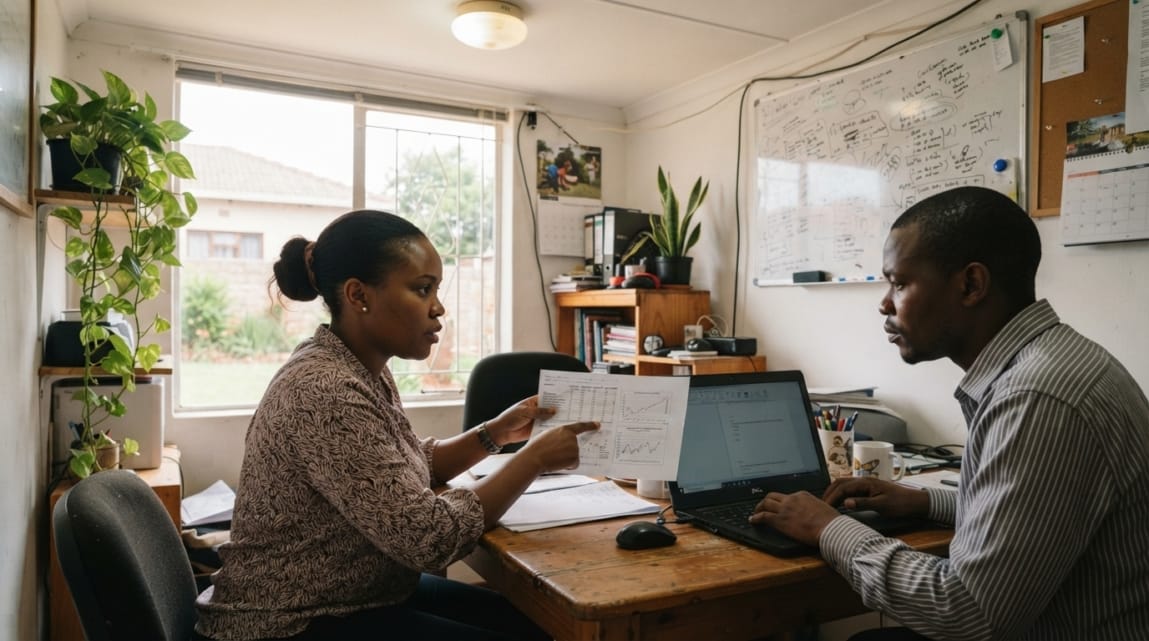
The right route depends on the risk and complexity of the project, not just the initial price. A simple brochure site with a small number of pages may be manageable with a site builder or an experienced freelancer. A website with several decision-makers, custom functionality, integrations, e-commerce, or an ongoing marketing plan usually benefits from clearer process ownership and broader technical capacity.
| Factor | DIY Site Builder | Independent Freelancer | Web Development Agency |
|---|---|---|---|
| Best suited for | A simple early-stage site when you have time to build and maintain it. | A focused project with a defined brief and limited technical complexity. | A strategic website, e-commerce build, redesign, or project involving multiple skills. |
| Typical timeline | Depends largely on your time, content readiness, and learning curve. | Can be quick for a small scope; capacity depends on one person. | Depends on scope and approvals, with planned milestones across the team. |
| Strategy and SEO | You set the structure and apply guidance yourself. | Varies by the freelancer’s experience and agreed scope. | Can combine planning, design, development, and technical search foundations. |
| Technical reliability | Limited by your platform knowledge and available templates. | Can be strong, but continuity may depend on one person. | Often provides specialist roles, documented QA, and backup capacity. |
| Long-term support | You maintain the platform or buy support when needed. | Depends on the freelancer’s availability and support agreement. | Should be defined through a maintenance plan or service-level agreement. |
Neither route is automatically right or wrong. The important question is whether the provider’s capacity, process, support model, and ownership terms fit the consequences of the project. For a more detailed decision framework, read this comparison of a freelance developer versus agency in Botswana.
The 8-Step Professional Web Development Process
Many summaries describe seven web design steps, but a practical client project also needs a distinct post-launch phase. The eight steps below separate decisions that are often mistakenly bundled together. When reviewing a provider, ask to see relevant examples of web design and development work and ask how the scope, functionality, and support approach compare with your needs.
Step 1: Discovery and Technical Requirements
Discovery turns a broad request such as “we need a new website” into an agreed plan. The agency should identify business goals, priority audiences, key services or products, competitors, conversion actions, required pages, content gaps, integrations, hosting considerations, and technical constraints.
The output should include a written scope or requirements document. It should make clear what is included, what is excluded, who approves work, what assumptions apply, and how change requests will be handled. This is the best protection against a project drifting into unpriced features or mismatched expectations.
Step 2: Information Architecture and Customer Journey Mapping

Before visual design begins, the team should decide how information is organised. A sitemap identifies the pages and their hierarchy. Customer journey mapping identifies what a visitor needs to know before taking the next step, such as requesting a quote, calling the business, booking a consultation, or purchasing a product.
For example, a Botswana professional-services firm may need clear service pages, industry proof, trust information, a location or service-area explanation, and an easy enquiry route. Wireframes can then establish the layout and priority of each page without distracting stakeholders with colours and imagery too early.
Step 3: UI Design and Visual Prototyping
UI design applies your brand to the agreed structure. It covers responsive layouts, typography, colour, imagery, buttons, page components, and the visual hierarchy that guides visitors towards important actions. Mobile-first thinking matters because a large share of prospective customers may first encounter a business through a phone.
A sensible review process defines how many design revision rounds are included and who has final approval. Consolidated feedback from one client-side decision-maker is much easier to action than conflicting comments from several stakeholders.
Step 4: Core Development and CMS Setup
Development converts approved designs into a functioning website. This may include frontend templates, backend functionality, databases, CMS configuration, user roles, forms, product templates, and custom features. The CMS should fit the people who will update the website after launch, not merely the developer’s preference.
Ask how the agency will separate content from code, protect administrative access, handle updates, and document custom functionality. If the website needs e-commerce or a customer portal, clarify the full user flow before development starts rather than assuming it can be added at the end.
Step 5: Content Migration and Technical Integrations
A site is not ready simply because its templates are built. Pages need approved copy, accurate service details, optimised images, contact information, legal or policy content where applicable, and calls to action. Existing content may need to be migrated, rewritten, consolidated, or removed.
This phase also connects the website to the business systems it needs. Examples include analytics, CRM tools, email notifications, booking tools, WhatsApp enquiry paths, maps, and payment processes. For Botswana e-commerce projects, confirm the intended payment journey early. Some businesses may need a gateway integration; others may use a documented manual EFT process. The build should reflect the real order, fulfilment, and customer-support workflow.
Step 6: Testing, Accessibility, and Mobile QA
Quality assurance should be a planned stage, not a hurried activity on launch day. It should cover major browsers, mobile screen sizes, navigation, broken links, form submissions, email notifications, page content, SSL, permissions, and important user journeys such as checkout or booking.
Accessibility review should be deliberate. The WCAG accessibility principles describe experiences that are perceivable, operable, understandable, and robust. A responsive layout alone does not establish accessibility conformance; a formal claim requires a documented audit against a defined standard and level.
Performance is also worth checking before launch. Tools such as PageSpeed Insights can provide useful diagnostic information, but a score does not replace testing real forms, integrations, content, and customer journeys.
Step 7: Deployment, DNS Migration, and Live Handover
Deployment moves the approved site from a staging environment to the live domain. The process may involve hosting setup, DNS changes, SSL checks, backup confirmation, redirect testing, and monitoring after the switch. If an existing site is being replaced, important old URLs should be mapped to relevant new pages rather than simply disappearing.
The client should retain ownership-level access to Search Console and be able to monitor how Google finds and reads key pages after launch. Google explains the practical setup and monitoring steps in its guide to getting started with Google Search Console. Sitemap submission or monitoring can assist discovery, but it does not guarantee immediate crawling or indexing.
Step 8: Post-Launch Support and Maintenance
Launch is the beginning of normal website operations, not the end of responsibility. Maintenance may include CMS and plugin updates, backups, uptime monitoring, security reviews, performance checks, content support, and troubleshooting. The appropriate level depends on the site’s functionality, traffic, data exposure, and business importance.
Security maintenance helps manage changing risks, especially where a site handles customer information, accounts, or payments. The OWASP Top 10 web application risks provides useful context for why updates, configuration reviews, and monitoring should not be treated as optional extras. Maintenance reduces risk; it cannot make a website completely secure.
What You Should Receive at Project Handover
Handover should give your business the ability to operate the website without being locked out of its essential assets. The exact ownership position depends on the signed contract, third-party licence terms, and payment status, so confirm these items before work begins rather than relying on verbal assurances.
- Domain and DNS control: registrar access or documented control arrangements for the domain, including a .bw domain where relevant.
- Hosting access: hosting credentials, renewal details, and a record of the hosting environment.
- CMS administration: an administrator account owned by the client, not only an agency login.
- Source files and code: source code, design files where included in the agreement, and documentation for custom functionality.
- Content and media: final copy, images, downloadable files, and confirmation of third-party licence limitations.
- Analytics and search access: client-controlled access to analytics, Tag Manager if used, and Search Console.
- Backups and recovery information: a current backup and clear instructions for restoring or requesting a restore.
- Training and support details: guidance for routine updates, named support channels, and the maintenance terms after launch.
What the Client Must Provide to Avoid Project Delays

Website delivery is shared work. An agency can plan, build, and test efficiently, but the project can pause when key business information, decisions, or approvals are unavailable. The most reliable approach is to appoint one internal project lead who can collect feedback and make or escalate decisions quickly.
- Approved logo files, brand guidelines, photography, and any existing visual assets.
- Accurate service descriptions, product data, price information where required, and business policies.
- Access to the current domain, hosting, website, analytics, email, and third-party platforms where migration or integration is required.
- A single source of consolidated feedback within agreed review periods.
- Prompt decisions on design direction, page priorities, functionality, and final content.
- Clear internal ownership of enquiries after launch, including phone, email, form, and WhatsApp response processes.
Late content, changing requirements, unclear approvals, and absent decision-makers are practical delay triggers. They do not mean a project has failed, but they should be managed transparently through revised milestones and documented scope changes.
How Long Does Website Development Take?
For planning purposes, a focused SME marketing website may take roughly 4 to 8 weeks once the scope, content, approvals, and access are ready. A more complex e-commerce build, custom portal, or website with multiple integrations may take 8 to 16+ weeks. These are indicative planning ranges, not Botswana-wide market benchmarks or promises.
The schedule changes with page volume, design complexity, custom features, product data, content readiness, payment or CRM integrations, migration needs, stakeholder availability, and the depth of testing required. A short deadline may be possible for a tightly defined project, but skipping discovery, QA, or handover usually shifts risk rather than removing work.
Budget follows many of the same variables. If you are defining an initial brief, this guide covers the main factors that affect website costs in Botswana without treating price alone as a measure of quality or delivery speed.
Typical Warning Signs When Hiring a Web Agency
Warning signs do not automatically prove that a provider is unsuitable, but they should prompt specific questions before you commit.
- No written scope: A quote that lists only “website design” leaves too much open to interpretation. Ask for pages, features, integrations, revisions, timeline assumptions, exclusions, and payment milestones.
- Unclear ownership: If the provider will not explain who controls the domain, hosting, CMS, code, analytics, and backups, negotiate and document those terms.
- No QA or launch plan: A provider should be able to explain how it tests mobile layouts, forms, integrations, redirects, backups, and post-launch issues.
- An unrealistically cheap quote: A low figure may exclude content, integrations, testing, migration, training, maintenance, or the time needed to do them properly. Compare scope, not just totals.
- No mobile-first explanation: Ask to see how key pages and conversion paths work on phones, not only a desktop mock-up.
- No relevant evidence: A shortlisted provider should show work that resembles your required complexity and explain its role, functionality, and support model rather than relying only on polished promises.
Planning Your Website Project: Actionable Next Steps
Before requesting proposals, prepare a one-page brief covering your business goal, audiences, required pages, examples you like, needed features, content status, integrations, domain and hosting situation, budget context, target launch window, and who will approve work. Then ask each provider how it documents scope, manages changes, tests the website, handles handover, and supports the site after launch.
A good web development agency in Botswana should make the process clearer, not more mysterious. If you have a defined requirement and want help turning it into a practical scope, Lephutshi Developers can help you request a website development quote based on the work your business actually needs.
Recommended Reading
- Freelance Web Developer vs. Agency in Botswana: Pros and Cons
- How Much Does a Website Cost in Botswana? Your Quick Guide & Calculator
- Web Design & Development in Botswana
FAQ
- What is a website development agency?
A website development agency is a team that plans, designs, builds, tests, launches, and may maintain websites. Its work can include business requirements, UX, visual design, CMS setup, custom functionality, integrations, technical SEO foundations, quality assurance, and handover. - How much does a web development agency in Botswana charge?
Pricing varies by scope, including the number of pages, content work, design complexity, custom functionality, e-commerce, integrations, migration, testing, and ongoing support. Published packages can provide a starting point, but a detailed brief is needed for a precise estimate; see Lephutshi’s current website design packages and starting prices for its own package pricing, not a Botswana-wide market average. - Who owns the website after it is built?
The client should negotiate for control of the domain, CMS, hosting, analytics, backups, content, and agreed code and design assets upon final payment. The signed contract and any third-party software or licence terms determine the exact ownership and usage rights, so these details should be written down before the project starts. - Can an agency redesign an existing website without losing SEO rankings?
An agency can reduce redesign risk by mapping old URLs to relevant new URLs, using permanent server-side redirects where appropriate, retaining important content, testing the migration, and monitoring Search Console after launch. Google’s site-move guidance supports this approach, but no agency can guarantee that rankings or traffic will remain unchanged during a migration. - How long does website development take?
A focused SME marketing website may take around 4 to 8 weeks when content, approvals, and access are ready, while complex e-commerce sites or custom portals may take 8 to 16+ weeks. The real schedule depends on scope, integrations, migration work, testing needs, and how quickly stakeholders provide content and decisions.